
written by: Trevor Ragan
In 2009 researchers ran an experiment on a group of middle schoolers from San Francisco. The students were divided into two groups before taking a couple biology lessons.
One group was told to study the material for themselves, the lessons were for their own knowledge and development.
The other group was told to study so they could teach the information to a digital character.
They all completed two 50 min lessons with the exact same content, the only difference was who they thought the learning was for.
During the lessons the group that was learning to teach worked harder. They spent more time reading, revised their work more often, and were more engaged throughout. And when both groups took a post-test on the material, the teaching group performed significantly better — especially on the hardest questions. On those questions, low-performing students from the teaching group scored as well as high-achieving students who had been studying for themselves.
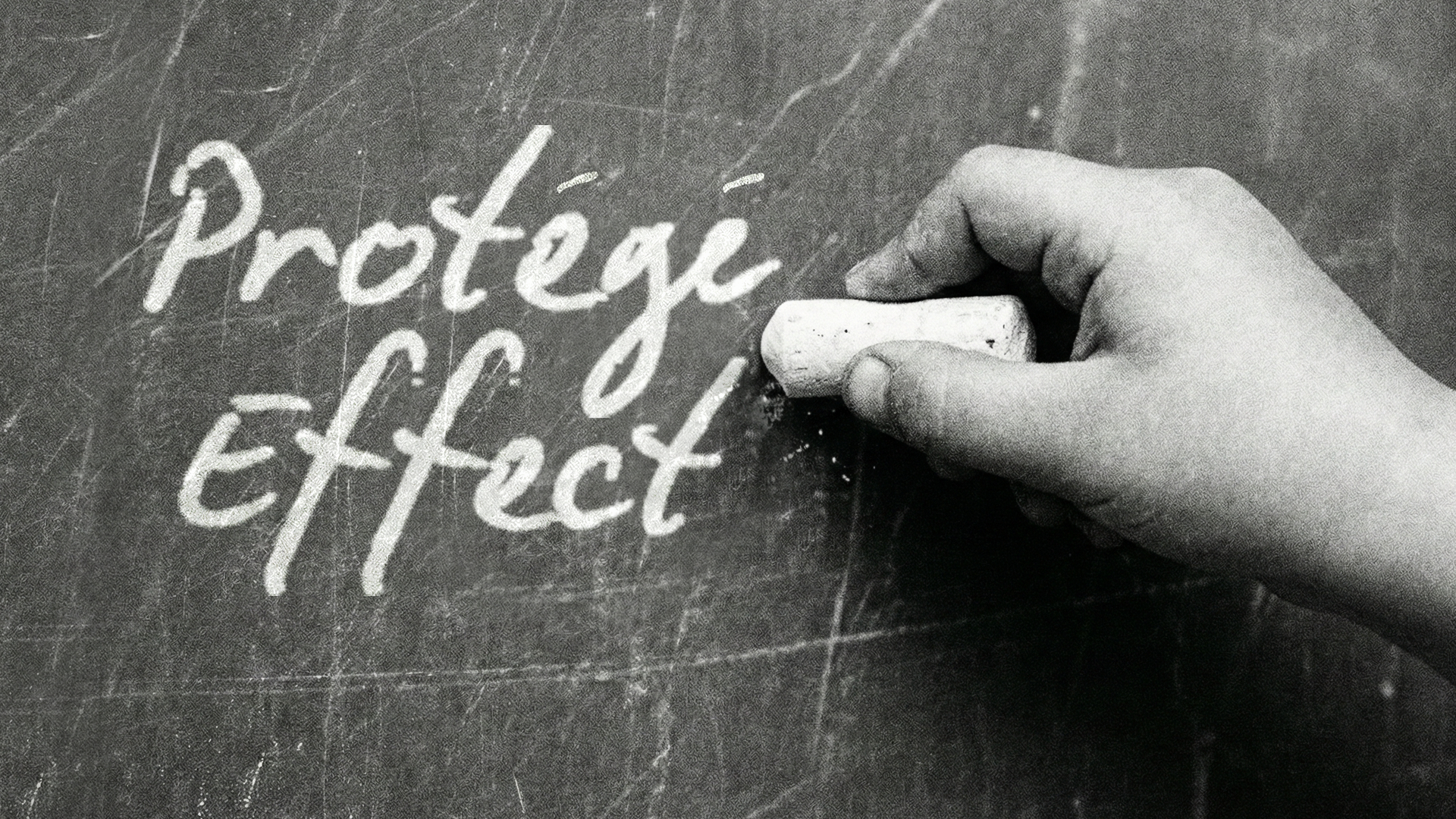
This is known as the protégé effect and it’s a simple but powerful tool you can use to learn better.
In a 2014 experiment researchers found that simply telling students they were going to teach the material afterwards, and not even making them actually do it improved learning. John Nestojko, the lead author, explains: “When compared to learners expecting a test, learners expecting to teach recalled more material correctly, they organized their recall more effectively and they had better memory for especially important information.”
Keiichi Kobayashi published a meta-analysis of 39 experiments looking at this effect. The analysis revealed a few key concepts:
1. Learning to teach significantly improves learning and retention.
2. Simply expecting to teach after a lesson can boost learning, but actually doing it is better.
3. And the most important: This only really works if you’re told that you’re going to teach before engaging in the lesson. In experiments where people are surprised with the teaching task after engaging in the lesson, the protégé effect disappears. There’s virtually zero benefit. You have to know beforehand.
And this makes sense. When we are planning on teaching afterwards we lock in a little bit more, we’re paying attention to details, connecting dots, and thinking about how we’re going to explain it later. It changes the way we engage with the experience, which helps us learn more. If we plan on teaching after an experience we’ll pay closer attention, look harder for what matters, and think more deeply about what we’re taking in. This keeps our brain in learner mode and maximizes what we gain from our experiences.
Some researchers have figured out how to put the protégé effect to work. David Yeager, a psychologist at the University of Texas at Austin, once told me that his colleague Christopher Bryan is “the best intervention developer I know in the world.” Together the two have used this technique to design some of the most effective education interventions in the field. When they build an intervention — say, to help students develop a growth mindset — they don’t just deliver the content and hope it sticks. They tell students upfront that they’re going to help teach the material to someone else afterwards. Then they deliver the lesson. After the lesson they have students write a letter to a future student — someone who might be struggling the way they once did — explaining what they learned in their own words. Planting the seed upfront changes the way students engage with the material, then having them “teach” it to another student further embeds the lessons.
I didn’t even know what the protégé effect was until a couple of years ago, but looking back I think it’s been my secret weapon this whole time. For the last 14 years every time I read a research paper, dig into a book, or interview an expert in the back of my mind I’m thinking: how could I turn this into a podcast episode, how could I explain this in a 10 min YouTube video, how could I explain this to a 10 year old so they actually understand it? Every time I learn I’m planning on teaching. And this helped me learn better and faster.
Obviously this is easy for me to do, it’s my actual job. But you can do this too and it doesn’t mean you need to make a Youtube video about everything you learn. Shrink it and simplify it.
If you read something interesting that you want to remember, call someone up and explain it to them. Research shows that that’s actually more impactful than re-reading. If you’re learning something complex and complicated and want to be able to synthesize it, try to explain it to a teenager. Pay attention to where you lose them or confuse them, fill those holes and try again. Learning new software in the workplace? Try to teach the basics to your partner at home. Remember you need to go into the situation planning on teaching someone after, and then, for best results, actually do it.
And if you’ve exhausted your friends and family, or don’t know any teenagers willing to sit through your lesson on supply chain logistics, this is a great use case for AI. A simple prompt like: “Imagine you’re a teenager, I’m going to teach you a short lesson on ____. Let me know when you get bored or confused” should do the trick.


 Apple Podcasts
 Spotify