
Feedback can help us get better. It’s also uncomfortable to receive. A lot of valuable learning experiences share that combination: experimenting, struggling, making mistakes, working on weaknesses. All useful, but all a bit uncomfortable.
How do we get ourselves and others to be more open to those experiences? A common approach is surface level—just tell people to do it: feedback is good for learning, you need to be open to it, mistakes help us grow, go try new things and mess up. Basically, this thing is good for you so you should do it.
Research by Stanford psychologist Alia Crum and her colleagues points to another approach.
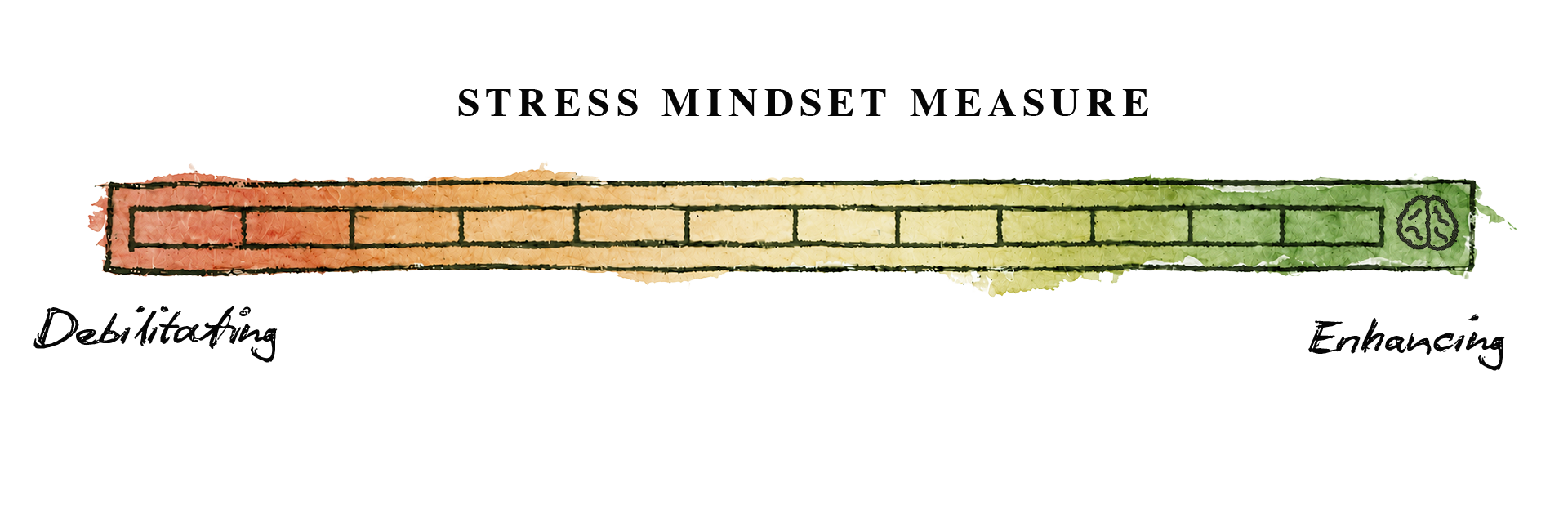
The Stress Mindset Measure
Crum developed a short survey called the Stress Mindset Measure. It asks about what you believe stress does to your health, performance, and ability to learn. Do you generally see stress as harmful and debilitating? Or do you believe it can also help you rise to challenges and grow?
Your answers place you on a spectrum from a stress-is-debilitating mindset to a stress-is-enhancing mindset.
Early one semester, a class of college students completed the stress mindset survey. Later in the semester, during a lecture on charisma, the students received an assignment: they had ten minutes to prepare a speech. Five students would be randomly selected to deliver theirs in front of the class. Their classmates would evaluate them, and business school experts would judge the recordings.
An uncomfortable but potentially valuable experience.
Before anyone had to deliver their speech, the students answered a series of questions about feedback: how comfortable they’d be receiving it, how willing they were to receive it, whether they wanted it if they were picked, and whether they wanted an additional opportunity to receive personalized feedback at the business school.
About 75% of the students said they wanted feedback if they were picked. Only about 25% wanted the additional feedback opportunity at the business school.
The interesting question is what led to those results: what made some students more open to feedback?
The researchers looked at nerves—how stressful the students found the experience. They also measured cortisol, a stress hormone, using saliva samples. Maybe the students who found the experience less nerve-racking, or those with lower cortisol levels, would be more open to receiving feedback? They also looked at students’ emotion-regulation habits.
None of these factors showed a clear connection to wanting feedback.
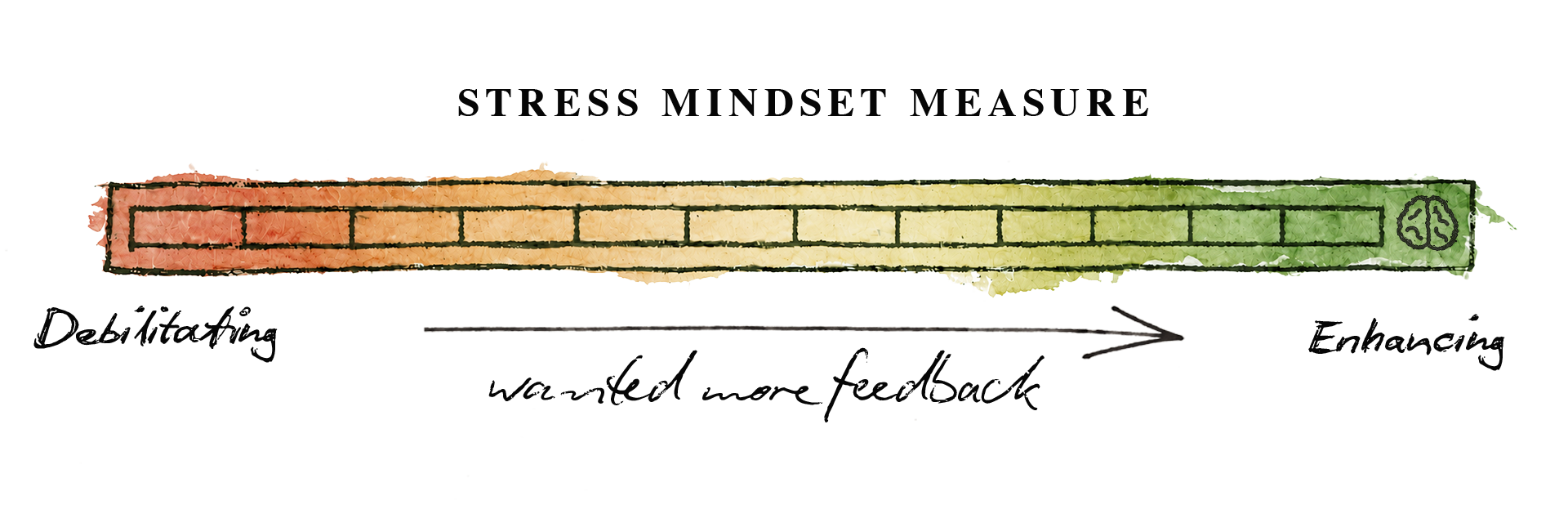
Stress mindset did. The more a student believed stress could be enhancing, the more feedback they wanted.
You’re likely thinking two things right now:
1. Where would I land on the stress mindset spectrum?
2. Can we change our mindset toward stress?
Yes, this mindset is changeable.
Shifting our Mindsets Towards Stress
Crum ran an experiment with employees at a financial firm. First she had everyone take the stress mindset assessment. On average the employees skewed toward a stress-is-debilitating mindset.
Then a portion of the employees watched a few short videos helping them to rethink stress. The videos showed them some of the unexpected benefits—how it can improve performance and drive learning—and helped them think of it as something ok, normal, and sometimes even useful.
Watching these videos shifted their mindsets and led to a number of benefits.
They reported fewer symptoms of anxiety and depression. They rated their workplace performance higher, too, with improved scores on a survey measuring the quality and accuracy of their work, how well they held their focus, how many new ideas they generated, and how much they contributed to the people around them.
Together, these findings suggest another way to support learning: address how people think about the stress involved. Working on the mindset can help shape the behaviors.
So, when we say: Feedback is good for you, so be open to it. Mistakes help you grow, so go make some.
We can go deeper and add: Trying something new, making mistakes, hearing feedback—none of it feels entirely comfortable. That’s normal and expected. The discomfort usually means you care about what you’re doing and you don’t know yet how it will turn out. You can feel stressed and still learn something valuable. And that stress can work for you. It can sharpen your focus and fuel your performance.
Find out Your Stress Mindset
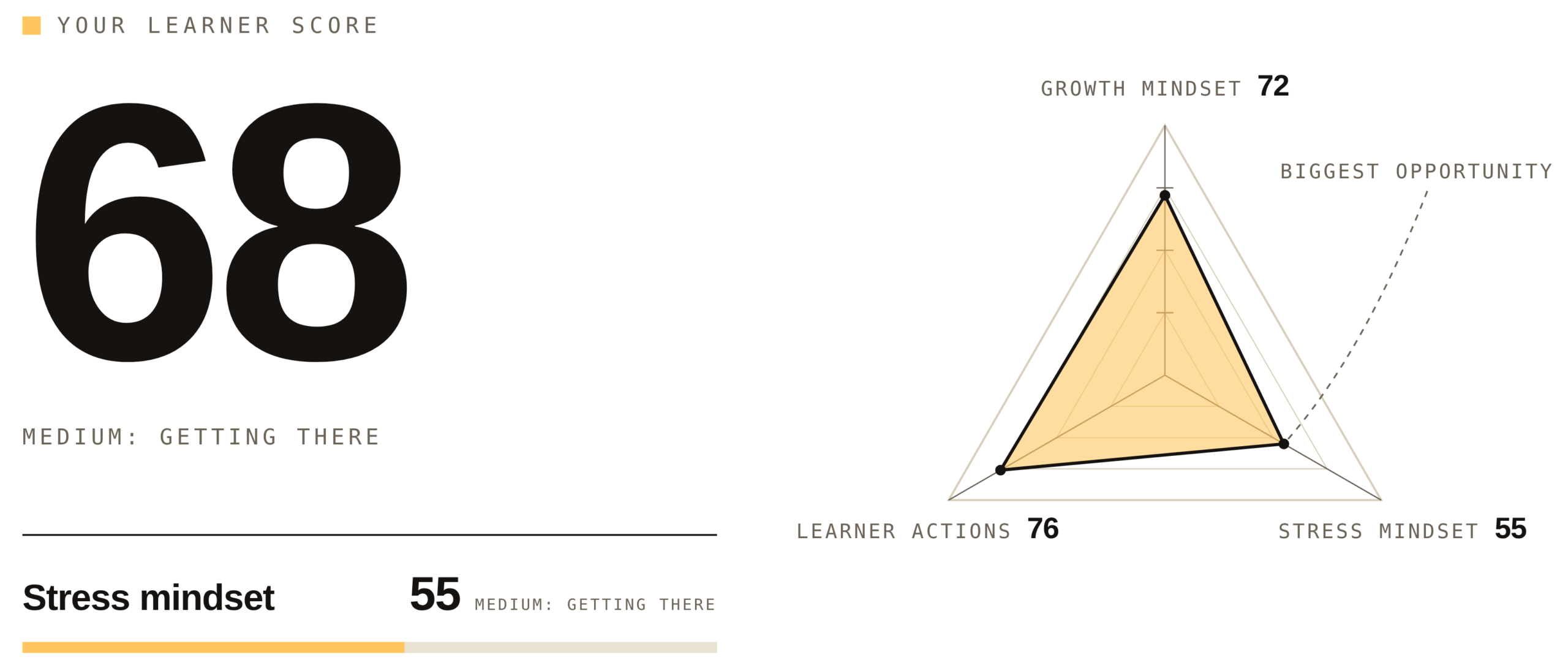
Curious where you would land on the stress mindset spectrum? We built an assessment tool that measures your stress mindset and a few other important variables for learning. You’ll receive a full report plus links to content to help you improve in the areas you need it most. It’s free and takes about three minutes:
Rethink Stress
If you’re interested in shifting your mindset toward stress, this video is a great place to start:
Research: Crum, Salovey, and Achor (2013), “Rethinking Stress: The Role of Mindsets in Determining the Stress Response,” Studies 1–3.